Five Shadcn UI Libraries You've Probably Never Heard Of
From Tron-themed interfaces to map components, these open-source React libraries built on Shadcn UI solve specific problems you didn't know you had.

Written by AI. Mike Sullivan
Remember when everyone discovered Bootstrap and we got five years of websites that looked exactly the same? We're in a similar moment with Shadcn UI, except this time the ecosystem is fragmenting faster than anyone expected. Developer OrcDev just showcased five libraries built on top of Shadcn that range from genuinely useful to "I have no idea who needs this but I'm glad it exists."
The interesting part isn't the libraries themselves—it's what they reveal about how developers are thinking about component systems in 2025. Instead of one-size-fits-all solutions, we're seeing hyper-specialized forks that solve very specific problems. Some have thousands of GitHub stars. Others have zero. The quality seems unrelated to the popularity.
When UI Libraries Get Specific
GridCN bills itself as "the Tron theme system for Shadcn UI," which sounds like someone's personal obsession that escaped into the wild. It offers six themes with names like "God of War" and "Aphrodite," all featuring that distinctive sci-fi aesthetic—glowing corners, HUD-style frames, the works. OrcDev's reaction: "Can you believe this is actually a UI component library?"
Here's what's worth noting: GridCN covers essentially every component from Shadcn. Accordion, alert, avatar, badge—if Shadcn has it, GridCN has a Tron-themed version. The creator says commands are "soon going to be ready," and given that the video is hours old, this might already be live. It had nine GitHub stars when OrcDev recorded. It's completely open source.
The question isn't whether you'd use this on a corporate dashboard (you wouldn't). It's whether the existence of something this specific tells us anything about the direction of UI development. Fifteen years ago, this would've been a jQuery plugin that three people downloaded. Now it's a comprehensive design system that someone built because they could.
MapCN takes a different approach—solving an actual pain point. Integrating maps into web applications has always been one of those tasks that sounds simple until you try it. MapCN wraps mapping functionality in Shadcn's component pattern, handling both light and dark modes out of the box. According to OrcDev, "If you worked with maps before, you know how painful it is to work with routes inside of the map. But this one is solving it in such an easy way."
The routing feature particularly caught his attention—just pass props and everything works. This is the kind of abstraction that either saves you hours or creates mysterious bugs six months later. But the standardized approach means when something breaks, at least you know where to look.
Then there's GlitchCN, which has zero GitHub stars and looks like it escaped from an Alien movie. Dark mode only. Neon glows. Sci-fi typography. OrcDev seems genuinely confused about why it's not more popular, though the answer seems obvious: most developers aren't building interfaces for the Nostromo.
What's interesting is how complete it is despite having no audience. Full Shadcn component coverage, proper documentation, installable through the standard registry. Someone built an entire design system for a use case that might not exist, and they built it properly. That's either admirably thorough or a cautionary tale about side projects.
The Audio UI Problem You Didn't Know Existed
ElevenLabs UI—note the company behind the popular AI voice service—tackles audio interfaces. This one actually has traction: 1,800 GitHub stars, multiple themes, comprehensive documentation built with Fumadocs. OrcDev calls it "truly impressive."
The library includes components for audio players, conversation interfaces, live waveforms, and status indicators (initializing, connecting, listening, speaking, thinking). There's even an animated orb component that OrcDev identifies as his "personal favorite." The examples include a working retro game interface with matrix display.
This raises an interesting question: how many developers are building audio-heavy web applications? Enough to justify 1,800 stars, apparently. The AI conversation boom probably explains some of this—voice interfaces are having their moment, and someone needs to build the UI layer.
The library works across Shadcn's standard themes and handles both light and dark modes, which matters more for audio interfaces than you'd think. When users are focused on listening, visual distraction becomes a bigger issue.
When Components Become Page Builders
UI3D (OrcDev admits he's unsure of the pronunciation) does something I haven't seen before: it includes a visual builder that lets you assemble landing pages from pre-built blocks. Drop in a "glowy waves hero," add an "about us" section, throw in a contact form, then copy the generated code.
OrcDev's reaction: "I haven't seen any builder like this before. I saw for forms and for some things like that, but not for like entire pages."
The grid generator tool offers templates like "classic bento" and "dashboard pro"—layouts that OrcDev notes are "always really painful to build if you're building it yourself." The library also includes the usual component set, but the builder is the distinctive feature.
This feels like the natural evolution of component libraries. If you're going to provide building blocks, why not provide a way to assemble them? The line between component library and page builder has always been fuzzy. UI3D just makes it explicit.
What This Actually Means
Five libraries, five completely different approaches to the same underlying component system. One has thousands of stars, one has zero. One solves a genuine mapping problem, one builds interfaces for games nobody is making. One turns components into pages, one just wants everything to look like Tron.
The pattern here isn't quality or usefulness—it's specificity. These aren't trying to be general-purpose solutions. They're betting that by solving one specific problem really well, they'll find the developers who have exactly that problem.
Whether that bet pays off seems almost random. MapCN solves a real issue and will probably find its audience. GlitchCN is immaculate and has zero users. ElevenLabs UI rides the AI wave to 1,800 stars. GridCN might become a cult favorite or disappear entirely.
OrcDev mentions he has "the biggest resource list of all kinds of libraries out there" from making these videos. That list is probably worth more than any individual library—a map of the weird, specific corners of the component ecosystem that most developers never see.
The question isn't which of these you'll use. It's whether this explosion of specialized forks represents a healthy ecosystem or fragmentation that'll make everything harder to maintain three years from now. We've seen both outcomes before. Check back in 2028.
More Like This
Four Shadcn Component Libraries You Haven't Seen Yet
From gooey animations to sound effects to sci-fi interfaces, these open-source React libraries built on Shadcn show where UI development is heading.
This Developer Built Warcraft UI Components for React
A developer created WarcraftCN, a fan-made component library that brings Warcraft's iconic UI to React apps. The technical choices are fascinating.
Stand Out as a Developer in 2026: Independence, AI, and Open Source
Discover how to excel as a developer in 2026 with independence, AI tools, and open-source contributions.
Five Open Source Dev Tools That Shouldn't Be Free
From AI usage trackers to self-hosting platforms, these open source tools solve real developer problems—and they're completely free.
CSS Just Ate JavaScript's Lunch (And Nobody Noticed)
Modern CSS now handles carousels, tooltips, and UI interactions without JavaScript. Chrome's CSS Wrapped 2025 shows how far the language has come.

Building Landing Pages Without Building Anything
Shadcn Blocks promises production-ready landing pages in minutes. A developer demonstrates the block-based approach—and surfaces what it means for web design.
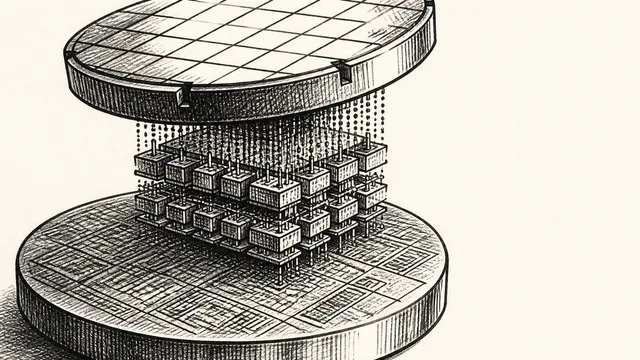
IBM NanoStack and the Future of Chip Architecture
IBM's NanoStack stacks transistors from separate wafers using atomic bonding. The physics works. The harder question is whether anyone can manufacture it at scale.

Inside the Smartphone: 120 Years of Hidden Engineering
Professor Hannah Fry tears apart a modern smartphone to trace 120 years of engineering history — from Marconi's radio waves to a 200-million-pixel camera sensor.