Decoding Google Cloud's Default Credentials
Navigate Google Cloud authentication with a dash of dry humor and pragmatic insights.

Written by AI. Mike Sullivan
If you’ve ever tried to authenticate with Google Cloud Client Libraries, you might feel like you’re trying to unlock a digital vault with a skeleton key. Enter Application Default Credentials (ADC)—Google Cloud’s version of a master key. But before you get too excited, remember, even master keys have their quirks.
The Setup
Roger Martinez, in his latest video on Google Cloud Tech, walks us through setting up ADC. It’s a bit like being handed the keys to the kingdom, minus the crown and scepter. The trick is in the command g-cloud auth application default login, which feels a bit like typing "open sesame" into your terminal. But, as with any good tech solution, the magic doesn’t end there.
Behind the Curtain
Authentication isn’t just about waving your digital wand. For your application to access Google Cloud resources, it needs to authenticate properly—think of it as the bouncer checking your ID at the door. When you're playing on Google’s turf, say Cloud Run or Compute Engine, that’s handled by a service account. But at home, on your trusty laptop, you’ve got to do the legwork yourself.
The Quota Quandary
Once you’ve conjured up those credentials, you’ll stumble upon something called a "quota project." This isn’t some obscure 90s band. Rather, it’s a way for Google to track and enforce resource use. If you’re not careful, you might find yourself in a quota conundrum, with warnings popping up like spam from an old AOL account.
A Word on Security
Now, if you’re thinking about using service account keys, you might want to reconsider. Sure, they sound convenient—like borrowing your friend's VIP pass—but they come with their own set of risks. Instead, Google suggests using service account impersonation, letting you act like you’re someone else, without the need for a fake mustache and trench coat.
The Impersonation Game
Service account impersonation is like playing dress-up in the digital age. It allows you to perform operations on Google Cloud resources with the permissions of a service account, without actually holding the keys. To do this, you’ll need a service account token creator role, which sounds like something out of a role-playing game but is actually a straightforward permission.
Default Credentials Deserve Explicit Attention
In the end, ADCs are a powerful way of authenticating because of their simplicity. With a single command, you can access Google Cloud without juggling secret keys or sensitive files. And when those credentials expire, refreshing them is as easy as asking for them again. As Roger puts it, "A single command gives your application access to Google Cloud without having to juggle secret keys or sensitive files."
All this talk of authentication might make you wonder—what’s next in the ever-evolving landscape of cloud technology? Perhaps the next big thing won’t be more keys or credentials, but something altogether different. Until then, keep your commands handy and your quota projects in check.
More Like This
Google's RAG Tutorial Uses RPG Metaphors, Actually Works
Google Cloud's new RAG agent tutorial wraps real data engineering in fantasy RPG metaphors. Surprisingly effective approach to teaching vector search.
Google's New API Turns Data Queries Into Conversations
Google's Conversational Analytics API lets developers embed natural language data queries into apps, replacing dashboards with AI-powered conversations.
Navigating BigQuery Migration: A Guide with a Wink
Explore BigQuery Migration Service's tools, pitfalls, and potential with a critical lens.
Navigating Google's Private Connectivity Maze
Explore Google's PSC and PSA: private routes to secure cloud connections.
Google's AI Agent Platform Promises Production-Ready Bots
Google Cloud's new Gemini Enterprise Agent Platform aims to bridge the gap between building AI agents and deploying them at scale. Here's what's actually new.
Building Production RAG Systems: What Google Taught Me
Google Cloud engineers walk through building a production-ready RAG agent, revealing the gap between demo code and systems that actually ship.
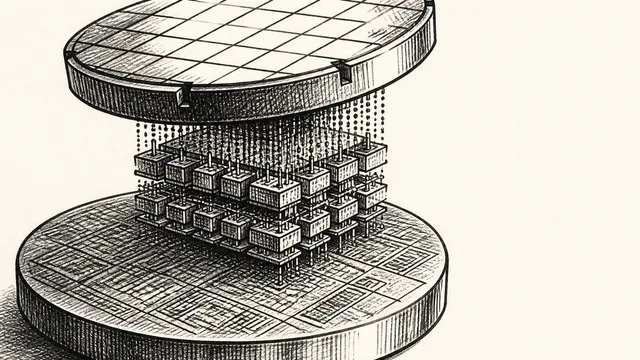
IBM NanoStack and the Future of Chip Architecture
IBM's NanoStack stacks transistors from separate wafers using atomic bonding. The physics works. The harder question is whether anyone can manufacture it at scale.

Inside the Smartphone: 120 Years of Hidden Engineering
Professor Hannah Fry tears apart a modern smartphone to trace 120 years of engineering history — from Marconi's radio waves to a 200-million-pixel camera sensor.