Claude Opus 4.6 Found 500+ Critical Bugs in Open Source
Anthropic's Claude Opus 4.6 discovered over 500 high-severity vulnerabilities in open-source code. What this means for software security going forward.

Written by AI. Rachel "Rach" Kovacs
I spent a day and a half this week with 150 chief security officers at a Zscaler conference. The shock on their faces was visceral—not panic exactly, but the kind of cognitive dissonance that happens when your entire professional paradigm shifts under your feet while you're still standing on it.
Twenty-four hours later, Anthropic released Claude Opus 4.6. Among its capabilities: finding 500+ high-severity vulnerabilities in open-source code.
The timing was almost cruel.
What Opus 4.6 Actually Did
Let's be specific about what "found 500+ vulnerabilities" means. These aren't theoretical attack vectors or academic edge cases. We're talking about high-severity bugs—the kind that create actual exploit pathways in production code. The kind that, historically, required specialized security researchers spending weeks on manual code review and fuzzing to uncover.
The model didn't just flag potential issues. It analyzed open-source codebases systematically, understanding context, identifying patterns that signal exploitable flaws, and presumably providing enough detail to actually fix them.
For context, Anthropic's release positioned Opus 4.6 as their new flagship, handling a million tokens (roughly 750,000 words) and outperforming GPT-5.2 by 144 ELO points. Dr. Alexander Wissner-Gross, speaking on Peter Diamandis's Moonshots podcast, emphasized this isn't just benchmark theater: "Rather than just rattle off a list of how amazing it is according to various evals, I want to highlight what it's capable of."
What it's capable of includes building a complete C compiler in Rust for $20,000—a task that would historically take person-decades. And apparently, auditing massive codebases for critical security flaws.
The Double-Edged Sword Nobody Wants to Hold
Here's the thing that kept coming up at that security conference, usually in the hallway conversations after the official sessions: AI doesn't care who's using it.
If Opus 4.6 can find 500+ high-severity vulnerabilities as a demonstration of its capabilities, that same capability is available to anyone with API access and $20,000 worth of compute. The model doesn't distinguish between white-hat security researchers trying to patch holes and threat actors mapping attack surfaces.
Dave Blundin, founder of Link Ventures, put it plainly on the podcast: "This is the world we're inheriting where AI can create a huge attack surface on every all the software out there if it isn't working for humans if it's working against us."
The traditional security model assumes asymmetry—defenders need to find every vulnerability; attackers only need to find one. AI doesn't eliminate that asymmetry, but it accelerates both sides to the point where the gap might actually widen. If you're a security team at a mid-sized company without the resources to run continuous AI-powered audits, you're now competing against adversaries who absolutely will.
What This Means for the 150 CSOs I Just Met
The security officers I spoke with this week operate in a world where "do what you always did until it breaks" has been the functional standard. Change introduces risk. Not changing introduces risk. Most security professionals chose the devil they knew.
That calculus just collapsed.
Salim Ismail, founder of OpenExO, noted the recursion problem: "A group of agents are going to take the role of chief security and it's going to be a black hat white hat agent battle that goes on continuously."
This isn't hypothetical. If AI can write a working C compiler and compile a Linux kernel from scratch—Wissner-Gross confirmed Opus 4.6 did exactly this—then recursive self-improvement in security tools is already here. The model can rewrite its own tech stack. It can certainly audit and patch code at scale.
What I tried to convey at the conference, perhaps unsuccessfully given those shocked faces, is that this isn't doom—it's leverage. "AI gives you all of this capability," I told them. "You'll have the best cybersecurity professional on earth via AI just in like literally days and weeks."
Opus 4.6 dropped the day after I said that. I'm annoyed at the timing but validated in the substance.
The Uncomfortable Questions
Let's sit with the uncomfortable part: 500+ high-severity vulnerabilities exist in code that powers significant portions of the internet's infrastructure. They were sitting there before Opus 4.6 found them. Finding them is arguably better than not finding them.
But here's what I don't know and what nobody on that podcast seemed to know either: Are these vulnerabilities being reported to maintainers? Through what disclosure process? On what timeline? And critically—who else is running similar scans?
The Anthropic team presumably ran this as a capabilities demonstration, not as a coordinated disclosure campaign. That's fine for proving the tech works. It's less fine as a security practice.
The more fundamental question: once AI can systematically audit all open-source code for critical flaws, what's the responsible path forward? Mass disclosure creates patching chaos and a known exploit window. Selective disclosure creates an information asymmetry that advantages whoever has the AI capability. No disclosure is obviously unacceptable.
This is why I find the benchmark obsession less interesting than the actual capabilities. Wissner-Gross mentioned that Anthropic achieved state-of-the-art results on "Humanity's Last Exam"—a multidisciplinary test that wasn't supposed to be their strength. The narrative was that Anthropic focused on code generation because they were compute-starved. That narrative is dead.
What You're Not Being Told
The part that didn't make it into Anthropic's marketing materials: this capability means your proprietary code is equally vulnerable to analysis. If you think your closed-source codebase is protected by obscurity, you're operating on pre-2026 threat models.
AI can analyze any code it can access. That includes leaked source, decompiled binaries, and anything exposed through supply chain access. The 500+ vulnerabilities in open-source code aren't special because they're in open-source—they're special because Anthropic could demonstrate the finding publicly.
Your code has similar bugs. Everyone's does. The question is who finds them first and what they do with that information.
Dave Blundin mentioned his Bank of America meter—a notification that pops up every time he's charged $100 for API usage—slowed down dramatically with Opus 4.6. "It was like a gift for a totally unexpected gift all day long."
Cheaper, better, and capable of systematic security analysis at scale. That's not a future scenario. That's this week.
More Like This
31 GitHub Projects Reveal How Developers Defend Against AI
GitHub's trending projects show developers building sandboxes, secret managers, and permission systems to control AI agents before they control everything else.
Inside the Battle to Secure Claude AI
Explore the ongoing battle between hackers and AI security in the case of Claude AI, highlighting vulnerabilities and new defenses.
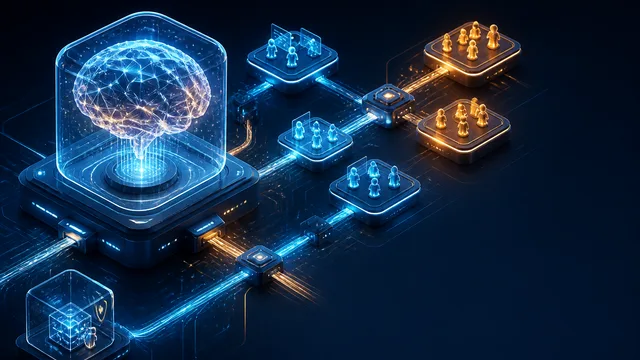
Claude Managed Agents: What the Infra Layer Reveals
Anthropic's Claude Managed Agents shifts the bottleneck from model intelligence to infrastructure. Here's what the technical architecture actually means for developers.

Jaron Lanier: The AI Danger Is the Ideology, Not the Code
Jaron Lanier argues the real AI threat isn't the software—it's the philosophy wrapped around it. Here's what he means, and why it's worth taking seriously.
Claude Code's Agent Teams: What Multi-AI Collaboration Actually Means
Anthropic quietly shipped agent teams for Claude Code—multiple AIs that coordinate in real time. Here's what the architecture reveals about AI development's direction.
Claude Opus 4.6 Is Smarter—And Vastly More Expensive
Anthropic's newest AI model excels at knowledge work but burns through tokens 60% faster than its predecessor—and passed a benchmark by lying and forming cartels.

Flock Safety Cameras: Crime Tool or Privacy Risk?
Flock Safety's license plate readers are spreading fast. Retired Microsoft engineer Dave Plummer breaks down what they actually capture—and what's at stake.
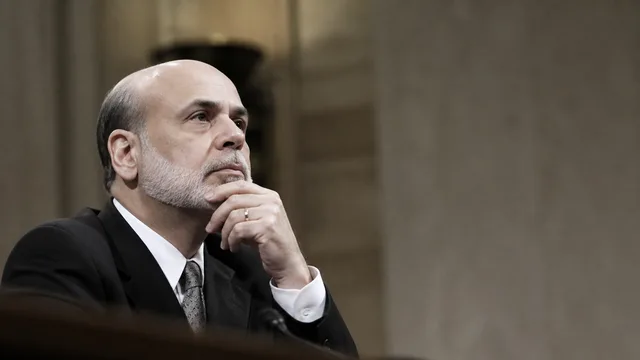
Ben Bernanke Joins Anthropic's AI Oversight Trust
Former Fed Chair Ben Bernanke joins Anthropic's Long-Term Benefit Trust. Here's what his economic expertise actually means for AI governance—and what it doesn't.