China's AI Agents Are Getting Scary Good—And Cheap
ByteDance and Alibaba just dropped AI agents during Lunar New Year. The timing matters, the tech matters more, and the cost efficiency changes everything.

Written by AI. Tyler Nakamura
Something weird just happened in AI, and the timing tells you everything you need to know.
ByteDance dropped Doubao 2.0 right before Lunar New Year. Alibaba countered with Qwen 3.5 and threw $400 million at user acquisition. DeepSeek is still lurking after last year's surprise takeover of the holiday window. And Google DeepMind released Aletheia, an AI agent that's actually writing publishable math research on its own.
This isn't coincidence. It's strategy. And what's happening here matters way more than the usual AI hype cycle because we're watching the shift from chatbots to actual agents—systems that plan, execute, verify, and keep working without constant human hand-holding.
The Holiday Window Everyone's Fighting Over
Last year, DeepSeek hijacked Lunar New Year with a low-cost, high-performance model that shocked people outside China and briefly dominated global AI conversations. ByteDance clearly remembers that. Doubao 2.0 isn't just a product launch—it's a defensive play to own the attention window when 155 million weekly active users (nearly double DeepSeek's 81.6 million) are sharing tech with family, trying new apps, and generally more open to switching tools.
The video creator describes Doubao 2.0 as "a model built for what everyone is now calling the agent era." That framing shift is real. The pitch isn't about better chatting or smoother text generation. It's about AI that can "carry out complex multi-step tasks in the real world. Think planning, execution, verification, and follow through all in one loop."
ByteDance claims the Pro version delivers reasoning comparable to GPT-4.2 and Gemini 2.0 Pro while cutting costs by roughly an order of magnitude. That cost claim isn't marketing fluff—it's the entire game. When you move from simple queries to long-running agents that plan, act, revise, and keep working, token usage explodes. Every step burns compute. If you can match Western performance at 10% of the cost, you're not just competitive—you're rewriting the economics of who can afford to deploy AI at scale.
Alibaba Bought Its Way Into Contention
Here's where it gets interesting. Alibaba launched a massive coupon campaign for Qwen on February 6th, throwing 3 billion yuan (about $400 million) at incentives. Users could redeem coupons directly inside the chatbot for food and drinks.
The effect was immediate and kind of wild. Qwen's daily active users jumped from 7 million to 58 million in just days. That put it only 23 million daily users behind Doubao—an insane swing driven almost entirely by incentives.
This tells you something important about China's AI market that doesn't get enough attention in Western coverage: user loyalty is fluid. People will try whatever feels useful, cheap, or rewarding in the moment. ByteDance still leads, but the gap closed fast enough to make everyone nervous.
Hardware Constraints Are Forcing Innovation
Under the surface, there's a geopolitics story shaping all of this. U.S. export controls have limited Chinese companies' access to Nvidia's most advanced GPUs. That constraint is forcing Chinese AI teams to obsess over efficiency in ways Western labs haven't had to yet.
They have to squeeze more performance out of fewer or less powerful chips, optimize inference, reduce token waste, and design systems that do more with less. ByteDance reportedly plans to spend over 160 billion yuan (around $22 billion) on AI-related procurement in 2026 alone. That's not a defensive move—that's a declaration they intend to compete at the frontier even with hardware restrictions in place.
The video notes that "while global media tends to frame everything as OpenAI versus Google versus Anthropic, the real daily competition for user attention, developer adoption, and ecosystem control is playing out between Bite Dance, Alibaba, Deepseek, Jepu AI, and others inside China's massive internet population." That matters because we're watching two parallel AI races—the one we cover constantly in Western tech media, and the one happening at scale inside China's ecosystem.
What Agents Actually Look Like When Pushed
Google DeepMind's Aletheia drop is fascinating because it shows where this agent concept goes when you take it seriously. It's designed for professional-level mathematical research—not consumer apps, not chatbots, but actual publishable work.
Aletheia runs an explicit agentic loop. One part generates a proposed solution. Another part verifies it, looking for flaws or hallucinations. A third part revises based on what the verifier finds. This loop keeps running until the output passes internal checks.
The results are legitimately impressive. Aletheia fully generated a peer-reviewed research paper without human intervention. It collaborated with human researchers on another proof by producing a high-level roadmap they refined. When deployed against 700 open problems from the Erdős conjectures database, it found 63 technically correct solutions and fully resolved four open questions on its own.
DeepMind even proposed a taxonomy for AI autonomy in mathematics, similar to autonomous driving levels. It's an attempt to close the evaluation gap between flashy AI claims and professional research standards—basically saying "here's what actually autonomous AI looks like, stop pretending your chatbot is an agent."
Open Weights and Global Ambitions
Alibaba's Qwen 3.5 comes in two forms: an open-weight version developers can download and fine-tune themselves, and a hosted API version on Alibaba's cloud. Both dropped right before Chinese New Year, just like Doubao 2.0.
The open-weight model has 397 billion parameters—actually fewer than Alibaba's previous flagship—but the company claims performance improvements across the board. More interesting: they expanded language support from 82 to 201 languages and dialects. That's not a regional play. That's global ambition.
Alibaba is also explicitly building for compatibility with open-source AI agents like OpenClaw, which recently surged in popularity. They want Qwen sitting at the center of an ecosystem where agents can plug in, act autonomously, and scale.
Counterpoint Research pointed out that AI agents could upend traditional internet and SaaS business models entirely. If agents start doing work directly for users, many existing software layers become optional or irrelevant. Chinese AI companies are clearly aware of this shift and positioning themselves ahead of it.
The Synchronized Escalation
What's striking is how all these threads line up. DeepSeek used last year's Lunar New Year to explode into global consciousness. ByteDance is trying to lock down attention with Doubao 2.0 and Seedance 2.0 (a video generation model that went viral and drew praise from Elon Musk). Alibaba is throwing money at Qwen adoption. Everyone understands this holiday window acts like an amplifier—family gatherings, social sharing, idle time, and curiosity combine into a perfect distribution engine.
And this is all happening while Western AI companies accelerate agent development too. Anthropic released new agent tools. OpenAI confirmed the creator of OpenClaw is joining the company. DeepMind is publishing research showing agents autonomously producing publishable math.
Demis Hassabis has said Chinese models are only months behind Western ones. So when ByteDance claims Doubao 2.0 matches GPT-4.2 and Gemini 2.0 Pro at a fraction of the cost, that claim sits in a very specific context. It's not just marketing. It's a response to hardware constraints, a defense against domestic rivals, and a bet that cost-efficient agents will define the next phase of AI adoption.
The video creator frames it as "a synchronized escalation," and that's exactly right. We're not watching isolated product launches—we're watching companies position themselves for a shift from AI as a tool to AI as an autonomous system that does work at scale.
Doubao 2.0's performance during this holiday period will signal whether ByteDance can hold its lead, or whether Alibaba's aggressive spending and DeepSeek's efficiency innovations start reshaping the rankings. Either way, the gap between "Chinese AI" and "Western AI" is closing faster than most people outside the industry realize. And the battleground isn't just performance anymore—it's who can deliver that performance at a price point where continuous deployment actually makes economic sense.
More Like This
OpenAI's Camera-Powered Smart Speaker Targets 2027 Launch
OpenAI's first hardware product—a smart speaker with continuous visual awareness—aims for early 2027. Price target: $200-300. Jony Ive's team is designing it.
GLM 4.7 Flash: The Free AI Model Revolutionizing Coding
Discover GLM 4.7 Flash, a free AI model that excels in coding, AI agents creation, and UI generation with impressive speed and performance.

Gemini 3.7 Flash and the Agent Economics Race
Google's Gemini 3.7 Flash arrives three weeks after 3.6 with sharp gains in coding and agents—and a pricing strategy designed to buy market share fast.
OpenAI Prism: Revolutionizing Scientific Research
OpenAI's Prism integrates GPT-5.2 into research, redefining scientific workflows with AI.
Perplexity Computer: The $200 AI That Does Your Job
Perplexity Computer automates complex workflows with parallel processing and scheduling. But at $200/month, does the math actually work?
AI Agents Move From Chatbots to Actual Work: What Changed
OpenAI's Symphony, Xiaomi's MClaw, and Microsoft's Phi-4 Vision represent a shift from AI assistants to autonomous agents that complete real tasks.

35 GitHub Projects Mapping the AI Agent Trust Gap
This week's GitHub trending list is less a catalog of tools and more a collective argument: developers don't fully trust AI agents yet—and they're building accordingly.
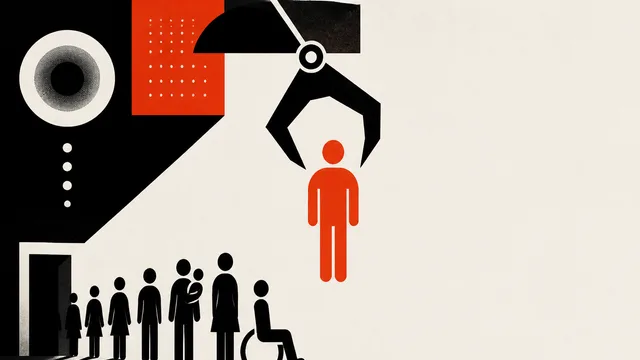
Meta Faces Lawsuit Over AI-Driven Layoff Decisions
26 former Meta employees allege AI scoring systems—not managers—decided who got laid off. Here's what that means for anyone who wants to work in tech.