Anthropic's Claude Dispatch Turns Your Phone Into an AI Remote
Anthropic's new Dispatch feature lets you control desktop AI tasks from your phone. Real productivity leap or overblown promise? We examine the claims.

Written by AI. Bob Reynolds
Anthropic released Dispatch this week, a mobile interface for its Claude Co-work desktop agent. According to Julian Goldie's demonstration video, you can now send your phone a message at 7 a.m., go about your morning, and return to find reports written, spreadsheets built, and files organized. Your AI did the work while you were elsewhere.
The pitch is seductive. The question is whether it holds up.
What Dispatch Actually Does
Dispatch extends Claude Co-work, Anthropic's desktop AI agent, with mobile control. The architecture is straightforward: Claude runs on your computer with sandboxed access to designated folders. You message it from your phone. It executes tasks using your local files. You return to completed work.
The critical distinction, according to Goldie's presentation, is that "Claude doesn't just give you text responses in the chat window. It writes directly into your folders. When you ask for a presentation, you get an actual PowerPoint file sitting in your directory."
This separates Co-work from conversational AI like ChatGPT or standard Claude. Those tools generate text you must implement yourself. Co-work produces artifacts—actual files in actual folders. Dispatch removes the requirement that you be at your desk to initiate this process.
Your phone becomes, in effect, a remote control for a desktop worker.
The Privacy Architecture
One legitimate concern with AI agents that access your files: where does that data go? Anthropic's answer is that it doesn't leave your machine. Claude runs in a sandbox on your computer. Files remain local. You explicitly approve which folders Claude can access before it acts.
This matters more than it might appear. Most cloud-based AI tools process your input on remote servers. Co-work processes on your hardware. For anyone handling confidential client data, proprietary research, or regulated information, that's the difference between a tool you can use and one you legally cannot.
The approval mechanism also prevents runaway automation. Claude doesn't roam your entire system making autonomous decisions. You define boundaries. It operates within them.
The Reliability Problem
Anthropic labels Dispatch a "research preview," which is corporate language for "this doesn't always work yet." Goldie acknowledges this directly: "Dispatch is currently slow and it's about a 50/50 shot whether what you try will work."
Fifty-fifty odds don't inspire confidence if you're delegating mission-critical work. But Goldie points to historical precedent: Gmail was invitation-only and unreliable for two years. The first iPhone lacked copy-paste. Early Uber crashed constantly.
The pattern with transformative technology is that early versions are unreliable, adoption grows anyway, and reliability follows investment. Whether that pattern holds here depends on whether Dispatch solves a problem people actually have.
The Iteration Velocity
One data point worth noting: Anthropic's shipping pace. Co-work launched January 12, 2026 as a Mac-only research preview. Pro users got access four days later. Team and enterprise followed within a week. Plugins arrived January 30. Windows support came shortly after. Dispatch launched less than 70 days from Co-work's debut.
That's aggressive iteration for a product this complex. It suggests either genuine user demand or significant internal commitment—probably both. Companies don't ship at this pace for products no one uses.
Felix Reeseberg, the Anthropic engineer who built Dispatch, described one use case that's telling for its mundanity: "finding a better seat on your next flight." That's not a dramatic enterprise workflow. It's the kind of five-minute task that has always required you to be sitting at a computer but never deserved five minutes of your attention.
If AI agents primarily handle tasks in that category—legitimate work that's nevertheless small and interruptible—their value proposition becomes clearer. They're not replacing human judgment. They're eliminating the friction of execution.
The Leverage Question
Goldie frames Dispatch as a shift "from AI as a tool you use to AI as a worker you manage." That's a stronger claim than most AI products can support, but it's worth examining.
Traditional productivity improvements make you faster at tasks. You type faster with a keyboard than a typewriter. You calculate faster with Excel than with a ledger. But you're still actively performing the work.
AI agents change the equation by enabling parallel execution. While you're in a meeting, Claude can be organizing files, drafting reports, and compiling data. You're not faster—you're multiplied.
Goldie cites research suggesting knowledge workers spend five hours daily on email, document creation, and file organization. If even half that time could be delegated to an AI agent operating in parallel with your primary work, the productivity implications are significant.
The counter-argument is that most knowledge work resists clean delegation. Drafting requires judgment. Organization requires understanding context. File management requires knowing what matters. These tasks involve human discretion at nearly every decision point.
The truth probably lies between these positions. Some tasks genuinely can be fully delegated. Many more can be 80% automated with human review for the final 20%. Very few remain entirely resistant to AI assistance.
The Distribution Problem
Goldie makes an uncomfortable observation: "The people who understand how to use these tools, who learn the workflows, who figure out how to give good instructions, who build systems around AI implementation, those people are going to pull away from the people who don't. Not slightly, by a lot."
This is probably correct, and it creates a compounding advantage problem. Workers who learn to use AI agents effectively will produce more output, which creates more resources for further optimization, which widens the gap further.
The people who fall behind, Goldie argues, won't be the lazy or unwilling. They'll be "the people who are so busy implementing the current workflows that they never have time to upgrade it." They're working hard with their heads down while the ground shifts beneath them.
That's speculation, but it's informed speculation. Every previous wave of workplace automation—spreadsheets, email, project management software—created similar divides between early adopters and late adopters. AI agents may accelerate that dynamic.
What Comes Next
Dispatch enables remote task initiation. The next obvious step is scheduled autonomous work. Goldie notes this capability already exists in Co-work: you can tell Claude to pull weekly data every Monday at 7 a.m. and compile a summary report.
The step beyond that is monitoring and conditional action—AI that watches for specific triggers and acts on its own judgment within defined parameters. "If you see an urgent email from any of my top five clients, summarize it and send me a text immediately."
At that point, you've crossed from delegation to supervision. The AI isn't waiting for instructions. It's operating continuously with human oversight.
Whether that's desirable depends entirely on your comfort with autonomous systems making decisions on your behalf. Some people will embrace it. Others will find it unsettling. Both reactions are reasonable.
What seems clear is that Anthropic is building toward that capability whether individual users want it or not. The company is iterating fast, responding to user behavior, and expanding functionality in a consistent direction. Dispatch is a waypoint, not a destination.
The question for anyone watching this space isn't whether AI agents will become more capable—they will—but what you'll do with that capability once it arrives.
More Like This
Anthropic's Claude Managed Agents: The AI Agent Platform War Heats Up
Anthropic just launched Claude Managed Agents, a platform that lets you build autonomous AI agents in minutes. Here's what it means for the AI automation race.
Claude's New Projects Feature: Context That Actually Sticks
Anthropic adds Projects to Claude Co-work, promising persistent context and scheduled tasks. Does it deliver or just rebrand existing capabilities?
Claude Cowork: AI's Next Step in Desktop Automation
Explore Claude Cowork, Anthropic's AI that redefines desktop automation, offering non-tech users powerful task management.
OpenClaw: The Self-Hosted AI Agent Running 24/7
OpenClaw is an open-source AI agent that runs constantly on your own hardware, automating tasks through simple chat commands while keeping your data private.
Anthropic Bet on Teaching AI Why, Not What. It's Working.
Anthropic's 80-page Claude Constitution reveals a fundamental shift in AI design—teaching principles instead of rules. The enterprise market is responding.
Google's Image AI Bets on Speed Over Perfection
Google's Nano Banana 2 signals a shift in AI image generation: good enough, fast enough, and cheap enough now matters more than perfect.
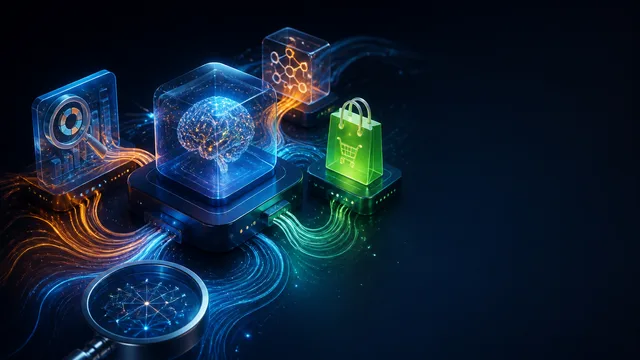
Claude Code and AI-Driven SEO for Shopify Stores
A live walkthrough of using Claude Code, SEMrush MCP, and Shopify to build AI-optimized pages raises real questions about where SEO is heading.

Garry Tan's Blueprint for the AI-Native Company
Y Combinator's Garry Tan argues that how you organize AI matters more than which AI you use. Here's what that means in practice.