Agent Zero Challenges AI Privacy Assumptions
Open-source AI agent Agent Zero offers full privacy and multi-model efficiency while running on your own server. Here's what that actually means.

Written by AI. Marcus Chen-Ramirez
There's a particular breed of tech demonstration that makes my engineer brain itch: the kind where someone says "this changes everything" while glossing over what actually changed and for whom. So when David Ondrej's tutorial on Agent Zero—an open-source AI agent you can run entirely on your own virtual private server—landed in my feed, I approached with appropriate skepticism.
Turns out the interesting story here isn't "AI agent does cool things." It's about architectural choices that shift where the privacy and cost trade-offs live.
The Control Topology
Agent Zero's core pitch is straightforward: it's an AI agent framework that runs in a Docker container on infrastructure you control. Through a web interface, you can give it tasks—analyze files, generate images, conduct research—and it orchestrates between different AI models to execute them. The tutorial walks through setting this up on a VPS (Ondrej uses Hostinger, his sponsor), configuring it to use Anthropic's newly-released Claude Opus 4.6, and demonstrating various capabilities.
The technical implementation reveals the actual substance. Agent Zero uses a multi-model architecture: a powerful model for main reasoning (in this case, Opus 4.6), a cheaper utility model (Gemini 2.5 in the demo) for routine tasks, and separate configuration for web browsing. This matters because it addresses a real cost problem with AI agents. "This is a huge advantage over Cloudbot, aka OpenClaw, which burns way more tokens if you give it access to Opus," Ondrej notes in the video. "Agent zero, you can use Opus and it will cost you way less money because you can set up different models for different things."
Compare this to Anthropic's Claude with Computer Use or OpenAI's GPT with web browsing—you're locked into their model pricing, their usage caps, their data policies. Agent Zero routes through OpenRouter, letting you mix and match models based on task requirements. Expensive reasoning where it matters, cheap inference where it doesn't.
The Secret Management Question
The tutorial spends considerable time on Agent Zero's approach to API keys and secrets, and this is where the privacy architecture gets genuinely interesting—or concerning, depending on your perspective.
Instead of pasting API keys directly into chat (which most AI agents require), Agent Zero has a separate secrets store. "The agent will be able to know the variable names but never the variable values," Nick, the developer helping with the demo, explains. "The values will be hidden from the agent and will not be added to the context. So this won't be shared with the external providers."
This sounds great until you map the actual data flows. Yes, your API keys aren't being sent to Anthropic or OpenAI as part of conversation context. But Agent Zero still uses those keys to make API calls—meaning the services you're calling still log your requests, tie them to your API account, and process whatever data you send. The privacy gain is real but narrow: your keys don't appear in prompt logs. The services you're calling still know exactly what you're doing.
What you do get is control over the execution environment. Agent Zero runs in its own Docker container with full Linux access. When Ondrej has the agent analyze its own configuration files to determine which model it's running, or when it creates a "flying cat over Dubai" image by teaching itself to use Nana Banana Pro's API from documentation, it's doing this on your hardware, in your logs, under your audit trail.
The Cost-Privacy Trade Space
The demo includes an interesting moment where both Claude Opus 4.6 and GPT-5.3 Codex release while they're recording. Ondrej and Nick pull up the benchmarks, noting something I've been watching: the coding improvement curves are flattening. Opus 4.6 actually scores lower than 4.5 on some coding benchmarks, even as it improves elsewhere.
"We are seeing some level of plateau," Ondrej observes. "And that's not good news for the stock market, which is already already in a nose dive."
Setting aside the market commentary, this plateau makes Agent Zero's multi-model strategy more defensible. If the gap between frontier models and runner-ups is narrowing, the cost savings from intelligent model delegation become more attractive. Why pay Opus pricing for every API call when Gemini can handle the routine stuff?
The privacy pitch follows similar logic. If you're already paying for API access, running your own orchestration layer adds control without much additional cost. You're self-hosting the coordination, even if the actual AI inference happens elsewhere.
What's Actually Here
Agent Zero isn't revolutionary privacy technology. It's not even fully private—it makes external API calls for core functionality. What it offers is a different point in the trade-off space between convenience, cost, control, and privacy.
You get:
- Full audit logs of what your agent does
- Control over which models handle which tasks
- API keys that don't appear in provider-side conversation logs
- The ability to add custom tools without waiting for platform providers
You trade:
- Setup complexity (though Docker helps)
- VPS hosting costs (Ondrej estimates about $8/month for the recommended tier)
- Responsibility for security updates and maintenance
- The polish and safety rails of commercial products
Ondrej includes an interesting warning at the start: "Agent Zero is very powerful. It will do whatever you tell it to do. So, make sure to use it ethically." This isn't just CYA—it's acknowledging that removing guardrails shifts responsibility to the user. Agent Zero won't stop you from doing things commercial AI services restrict.
The question isn't whether Agent Zero is better than Claude or GPT. It's whether this particular bundle of trade-offs serves specific use cases that commercial offerings don't. For someone who needs to process sensitive documents, wants full audit logs, and has the technical chops to maintain a VPS, maybe it does. For most users, probably not.
The interesting development is that this choice now exists at all. Two years ago, running a capable AI agent on your own infrastructure wasn't really feasible. Now multiple projects—Agent Zero, AutoGPT, others—offer that option. The commercial providers still have massive advantages in ease of use, integrated capabilities, and raw model performance. But the existence of viable self-hosted alternatives changes the negotiating position.
Tech decisions increasingly happen in public now, with their trade-offs visible. Agent Zero's architecture makes certain choices explicit that other tools keep hidden. Whether those are the right choices for you depends entirely on what you're optimizing for—and whether you're willing to do the work to maintain it.
More Like This
Microsoft's OptiMind: AI Revolution in Decision Making
OptiMind by Microsoft bridges the gap between business intent and mathematical optimization, promising a shift in decision-making processes.
32 GitHub Projects Show AI Agents Getting Small and Safe
From 500-line sandboxes to self-modifying agents, GitHub's trending repos reveal a shift toward transparency and control in AI tooling.
AI Agents Are Building Their Own Social Networks Now
OpenClaw gives AI agents shell access to 150,000+ computers. They're forming communities, religions, and social networks—without corporate oversight.
Running AI Agents Without a Mac: The VPS Workaround
How DigitalOcean's simplified setup is making AI agent deployment accessible—and what that means for the barrier to entry in autonomous AI.
AI Challenges Open Source: Tailwind CSS Struggles
AI impacts Tailwind CSS, highlighting open source sustainability challenges.
GitHub's Week of AI Agents: Economic Survival Meets Code
GitHub's trending projects reveal a shift: AI agents now manage their own wallets, die when broke, and face real survival economics. What changed?

35 GitHub Projects Mapping the AI Agent Trust Gap
This week's GitHub trending list is less a catalog of tools and more a collective argument: developers don't fully trust AI agents yet—and they're building accordingly.
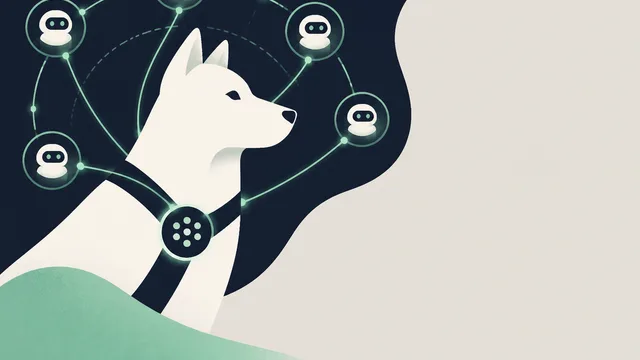
How Tailscale Is Becoming the Backbone of AI Agent Networks
Tailscale is emerging as critical infrastructure for multi-agent AI setups. Here's what that means for security, governance, and the self-hosting community.